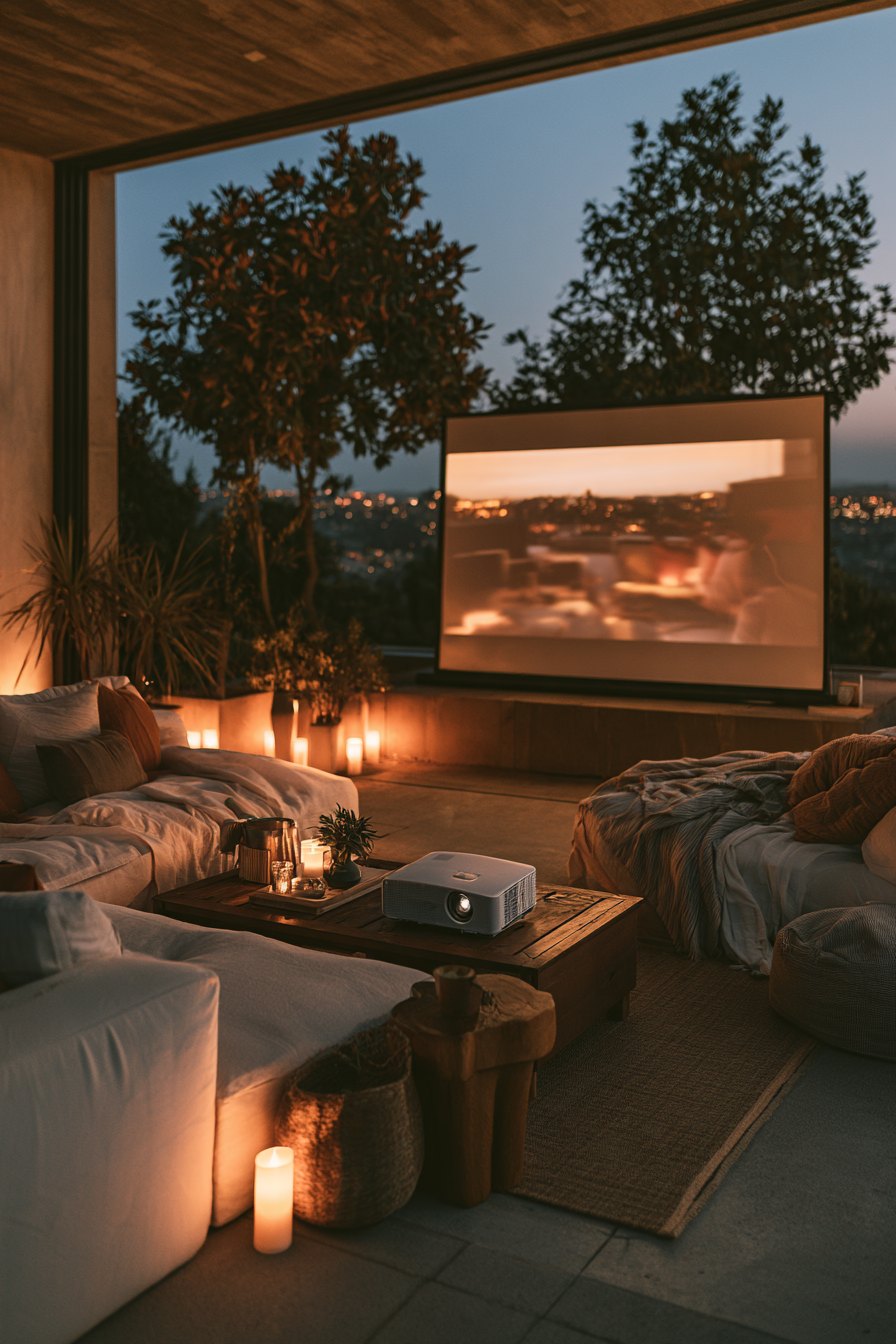
You have dimmed the lights, made the popcorn, and settled onto the couch — only to realize the 55-inch TV that looked massive in the store feels oddly small from twelve feet away. That single moment sends a lot of people down the projector rabbit hole. Before you buy anything, here is an honest look at both options so your next movie night is actually cinematic.
Screen Size and Viewing Distance
Screen size is the argument projectors win most convincingly. A mid-range 1080p projector can throw a 100-inch image from roughly 8 to 12 feet away — a distance that fits a typical living room or bedroom. A 100-inch flat-panel TV exists, but it costs several times more than a comparable projector-and-screen combo. If pure cinematic scale matters to you, projectors deliver it at a fraction of the price.
TVs fight back on sharpness and reliability. A 65-inch 4K panel at 8 feet gives you roughly 27 pixels per inch at the viewing distance, which is crisp and effortless. Projectors need a very clean throw — even a lamp left on across the room washes out the image. If your viewing space has windows, skylights, or open-plan lighting you cannot control, a TV is simply more practical for casual evenings.
Brightness and Ambient Light
Projector brightness is measured in lumens. For a dark, dedicated room, 2,000 to 2,500 lumens is plenty. For a room with some ambient light, aim for 3,000 lumens or higher. TVs are measured in nits; modern QLED and OLED panels routinely deliver 600 to 2,000 nits, making them genuinely usable in bright afternoon light. If you watch late at night with full blackout curtains, a projector shines — literally. If Sunday afternoon football is part of the picture, a TV handles that far better.
Placement and Setup
Projector placement takes planning. Most traditional long-throw models need 1 to 1.5 times the desired image width as a throw distance. A 100-inch image (roughly 87 inches wide) means the projector sits 87 to 130 inches — 7 to 11 feet — from the screen. Short-throw projectors cut that to 1 to 3 feet, which makes them workable in small apartments. Ceiling mounts keep the beam clean and the floor clear but require drilling and cable management.
TVs mount flat to a wall or sit on a stand. Setup takes minutes, not an afternoon. There is no alignment, no focus ring, and no risk that someone walking through the room casts a shadow across the third act. For families with kids or pets, that simplicity counts for a lot.
Sound: The Overlooked Variable
Neither projectors nor TVs have great built-in audio. Budget at least as much thought for sound as for the screen. A soundbar starting around $150 to $200 transforms the experience more than an extra inch of screen size. If you are ceiling-mounting a projector, run an HDMI cable to a receiver at the same time — you will thank yourself later.
The Real Problem: Content Fragmentation
Here is where both setups quietly fail people. You invest in a beautiful screen, pick a streaming app, and discover the film everyone is talking about lives on a platform you do not subscribe to. Add a sports package, a live-TV layer, and a couple of on-demand services, and you are suddenly managing four separate bills and four remote inputs just to cover one household. That friction — the missing channel, the show that rotated off a catalogue, the local game blacked out on a national app — is what makes people reconsider how they are watching altogether. A growing number of viewers find that a single service carrying live channels alongside a broad on-demand library, like Ovelo TV, cuts through that mess without juggling multiple subscriptions.
So, Which Should You Choose?
- Choose a projector if you have a dark or controllable room, want an image larger than 85 inches, and are comfortable with a short setup process.
- Choose a TV if ambient light is a factor, you want plug-and-play simplicity, or 4K HDR sharpness in a smaller space matters most.
- Hybrid households sometimes keep a TV in a bright common area and add a projector in a dedicated bonus room — both fed by one account at ovelotv.store so nobody fights over which app has what.
Final Verdict
The projector versus TV debate is really a question of your room and your habits. Get the screen right for your space, sort out the sound, and then tackle the content side — because a 120-inch image showing a buffering screen or a "not available in your region" message is still a bad movie night. People who have simplified their setup tell the same story: they stopped chasing individual apps and moved everything to one place, the way this streaming option lets you do, and suddenly the hardware choice became the fun part again.